P. Ramlee 50

02 · Life & Times

The Life and Times

1929 – 1973

Penang 1929 – 1947

1929

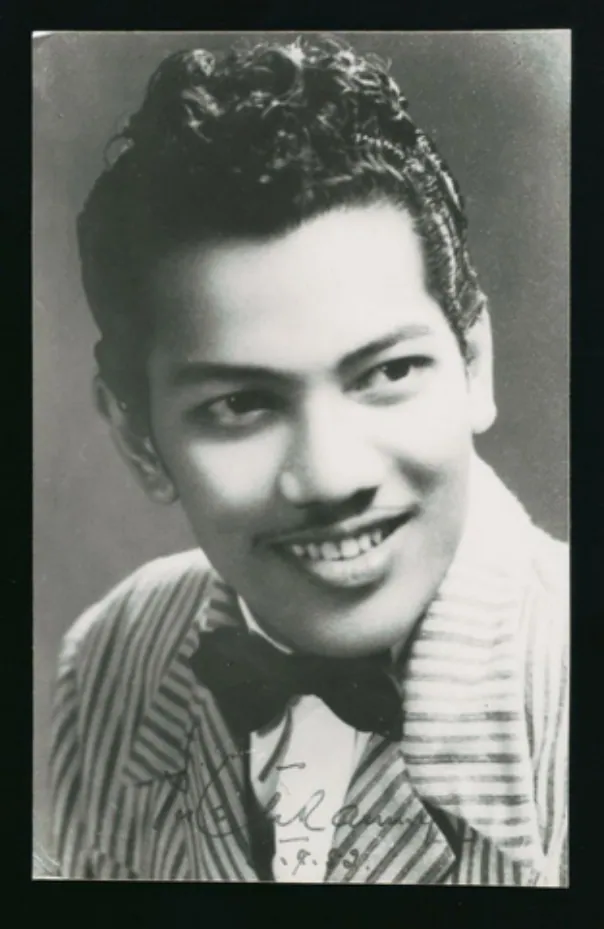
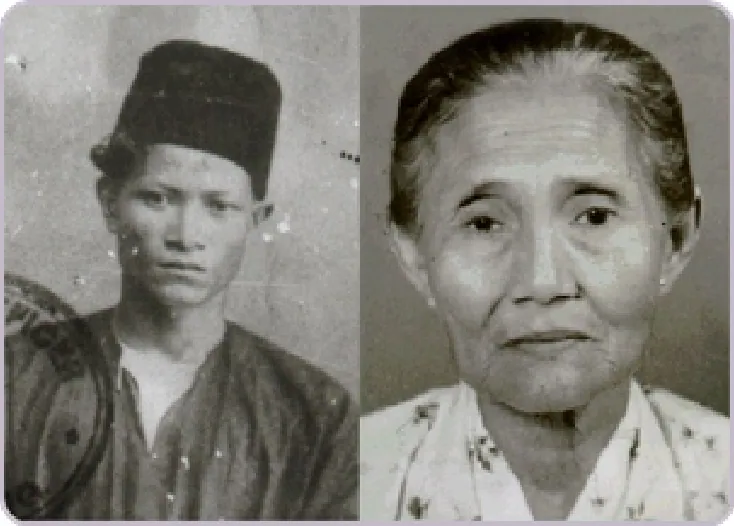
P. Ramlee was born on 22 March 1929 in Penang (Straits Settlements). According to family tradition, he was born on the morning of Hari Raya Aidilfitri. His father, Teuku Nyak Puteh bin Teuku Karim, was a sailor from Lhokseumawe, Aceh, and was married to Che Mah binti Hussein (Ramlee’s mother) in 1925 at Kubang Buaya, Butterworth.

Ramlee used the letter “P” at the beginning of his name, which stands for “Puteh”, his father’s name, taking inspiration from the Tamil patronymic naming conventions. He used the name P. Ramlee until the end of his life.
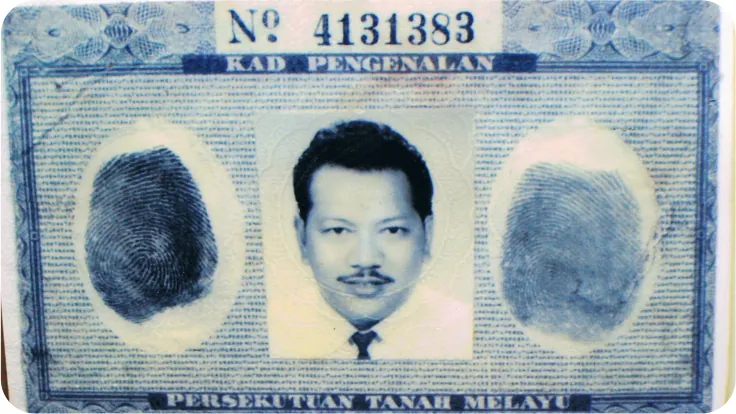
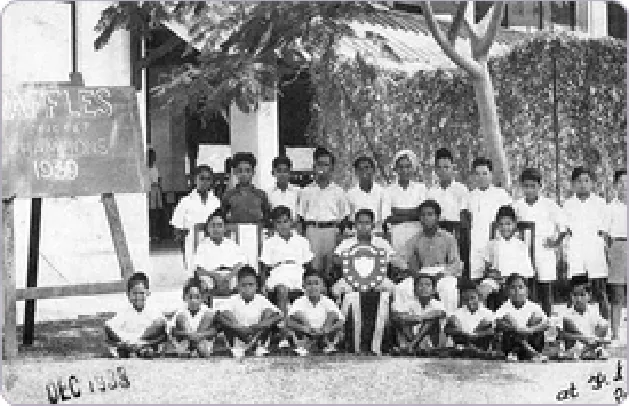
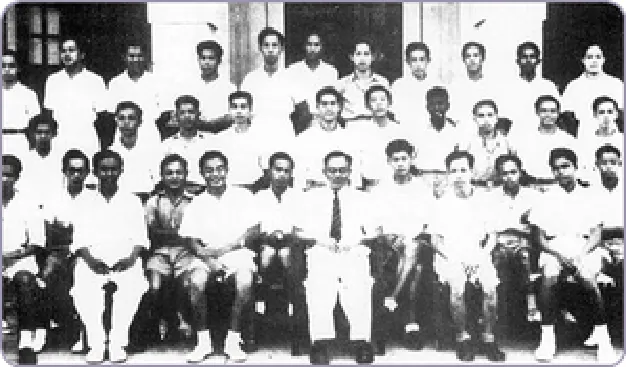
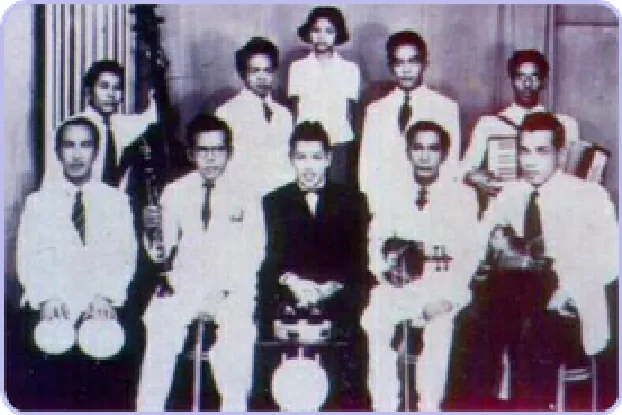
P. Ramlee’s passion for music started at a young age. He spent more time playing with various bands than attending school. Despite having very little technical training, he was able to master the ukulele, guitar, piano and violin.

During the Japanese occupation, P. Ramlee entered the Japanese Naval School (Kaigun), where he had the opportunity to learn Japanese songs.

1945

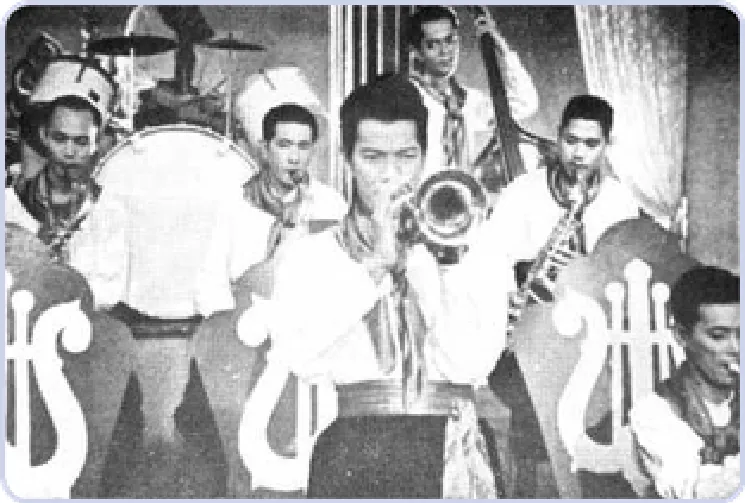
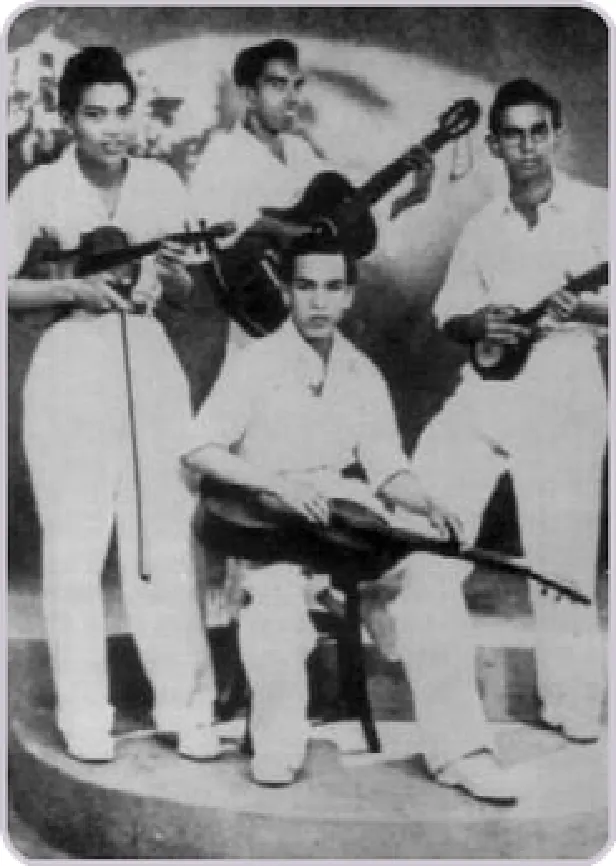
P. Ramlee learned music from Kamaruddin, the music teacher who led the Brass Band at Penang Free School. In 1945, he began learning to sing in the Teruna Sekampong choir, led by Mohd Zain Kechik. That year, P. Ramlee won third place in a singing competition organised by Radio Malaya in Penang. Later, he joined an Indonesian youth keroncong group as their lead violinist.

1946

While still in school, P. Ramlee won a keroncong competition for the whole of Penang and Seberang Perai by singing the song “Keroncong Oh Suchi”. The newspaper Warta Negara reported on 3 May 1946 that his name and the names of his group had been included in a keroncong competition at the “New World” amusement park.

1947

P. Ramlee became the champion of a singing competition organised by Radio Malaya, Penang.

Singapore 1948 – 1964

1948

P. Ramlee and his friend Mohd Yusop formed a music group called Pancharagam Mustika and were invited to perform at the Agricultural Show in Bukit Mertajam. B.S. Rajhans of Shaw Brothers was present at the show and was impressed by P. Ramlee’s performance, offering him a job in Singapore. P. Ramlee accepted the offer and began his career as an actor with Shaw Brothers.

While at Malay Film Productions in Singapore, P. Ramlee not only acted in films but also sang, composed songs, arranged music and lyrics, directed, screenwrote and led the MFP orchestra.

1949

P. Ramlee joined the HMV, Columbia and Pathe orchestras as a singer under the leadership of Osman Ahmad. With the help of Osman Ahmad, he recorded his voice onto the Ayam brand gramophone record. Meanwhile, P. Ramlee also formed a keroncong group named the “Kembang Murni Keronchong Party”, led by Mr Sarpin.

1950

P. Ramlee received an offer from T. Hemsley Company to record his voice on the Pathe label gramophone record. At the end of the same year, he stopped acting in films because the Shaw Brothers film company did not allow him to record his voice with a record company. Before renewing his contract, P. Ramlee performed in theatre shows with the aim of elevating Malay arts and culture. Between 1950 and 1955, he acted in 21 films. Director L. Krishnan chose P. Ramlee as the lead actor in the films Bakti (1950) and Takdir Ilahi (1950).

P. Ramlee married Junaidah, and they had a son, Nasir.

1951

Film Raya magazine chose P. Ramlee as “Bintang Pujaan” (Favourite Artiste), Malaya–Indonesia. Raden Mochtar from Indonesia was in second place.

1952

P. Ramlee won “Best Actor” for Antara Senyum dan Tangis, and the film, directed by L. Krishnan, won “Best Film” in a selection conducted by Film Raya magazine.

1954

Readers of Utusan Film and Sport magazine chose P. Ramlee as “Best Male Artiste”.

P. Ramlee and Junaidah divorced, and their son Nasir, who was born in 1953, was cared for by his grandmother in Penang.

1955

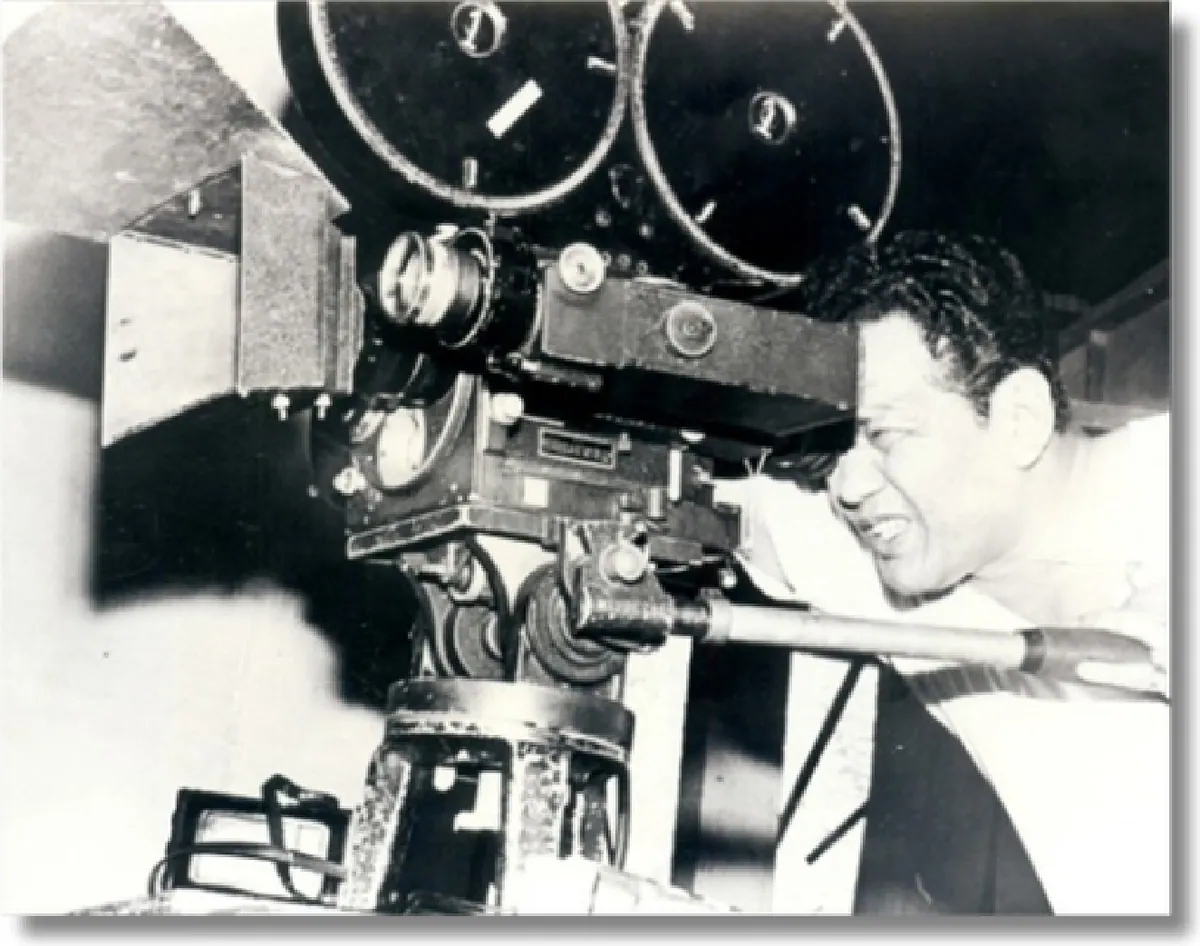
P. Ramlee was given the opportunity to direct a film by Shaw Brothers. His film Penarek Becha, which he directed and starred in, won “Best Film”, and P. Ramlee was named “Best Director”. It was his directorial debut, and he became one of the most successful Malay directors at MFP.

His song “Inang Baru”, which he composed for Penarek Becha, won “Best Song”.

P. Ramlee was chosen as “Best Male Artiste” by Utusan Film and Sport magazine, in collaboration with PERSAMA.

1956

P. Ramlee acted in the first historical epic film ever made by Malay Film Productions, Hang Tuah. His music for the film won “Best Musical Score” at the 3rd Asian Film Festival in Hong Kong in 1956.

Readers of Bintang magazine that year chose P. Ramlee as “Best Male Artiste”, “Best Composer” and “Best Singer”. Semerah Padi, directed by P. Ramlee, was selected as “Best Film”, and Anak-ku Sazali won second place; Phani Majumdar won second best director.

1957

At the 4th Asian Film Festival in Tokyo, P. Ramlee won “Best Actor” for Anak-ku Sazali.

On 26 June 1957, Hang Tuah (with English subtitles), starring P. Ramlee, was screened in competition at the 7th Berlin International Film Festival, West Berlin.

1958

Sumpah Orang Minyak won “Best Black-and-White Photography” at the Asian Film Festival in Manila.

1959

Pendekar Bujang Lapok won “Best Comedy” at the Asian Film Festival in Kuala Lumpur.

P. Ramlee wrote and performed a theatre play titled Sultan Mahmood Mangkat Di-Julang, based on the tragic history of Sultan Mahmud II of Johor and Laksamana Megat Sri Rama in Kota Tinggi, Johor.

1960

Nujum Pa’ Blalang won “Best Comedy” at the 7th Asian Film Festival in Tokyo.

P. Ramlee was also frequently invited to host radio shows. His excellence in this field was recognised by non-Malay groups. In February 1960, the Puspawarna Singapore programme was organised by Radio Singapore. Radio Weekly magazine (Vol. 8, No. 8, Sunday, 21 February 1960, page 16) gave its assessment of the show:

“Usually, entertainment programs that combine various cultures and performances appear somewhat vague and confusing. Puspawarna Singapore showed no such weaknesses, thanks to the effort of two responsible institutions in Singapore, the Radio Singapore Orchestra and the talented and entertaining artist P. Ramlee. The handsome and clever P. Ramlee managed the program using various languages spoken in Singapore. He effortlessly made people laugh in Malay, English, and Chinese at the same time!”

1961

P. Ramlee formed the Pancha Sitara group with Aziz Jaafar, Ahmad C, Kassim Masdor and Normadiah. The couple Aziz Jaafar and Normadiah later left the group and were replaced by Saloma and Ahmad Daud. One of their most popular songs is “Bila Larut Malam”, featured in the film Labu dan Labi (1962).

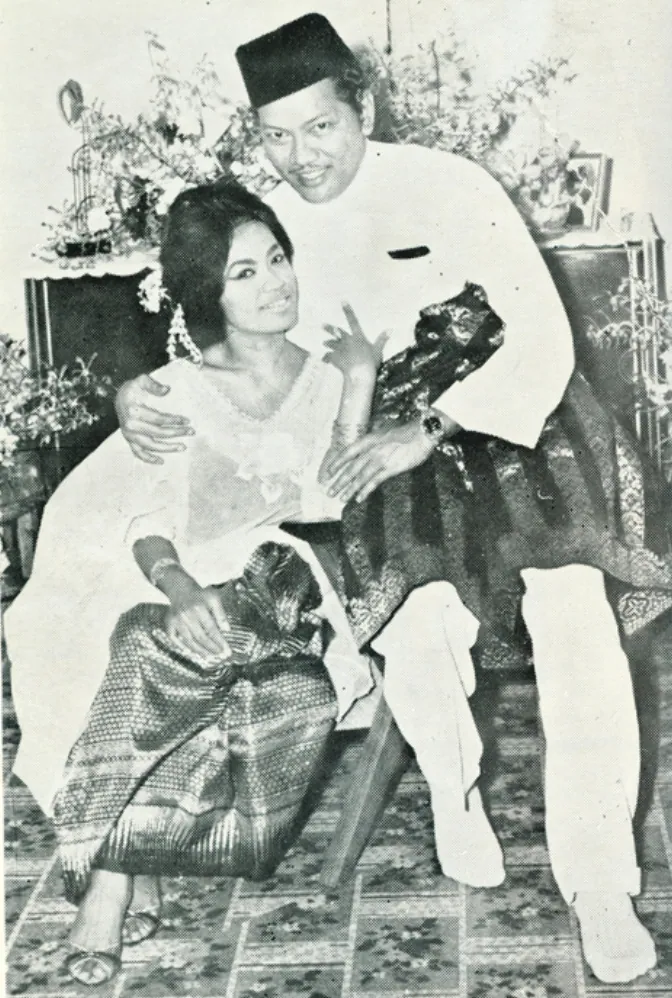
In early 1961, he divorced his second wife, Norizan. Before marrying P. Ramlee, Norizan was a former consort to the Sultan of Perak. On 21 November that year, he married Salmah Ismail (Saloma); they remained together until his death.

1962

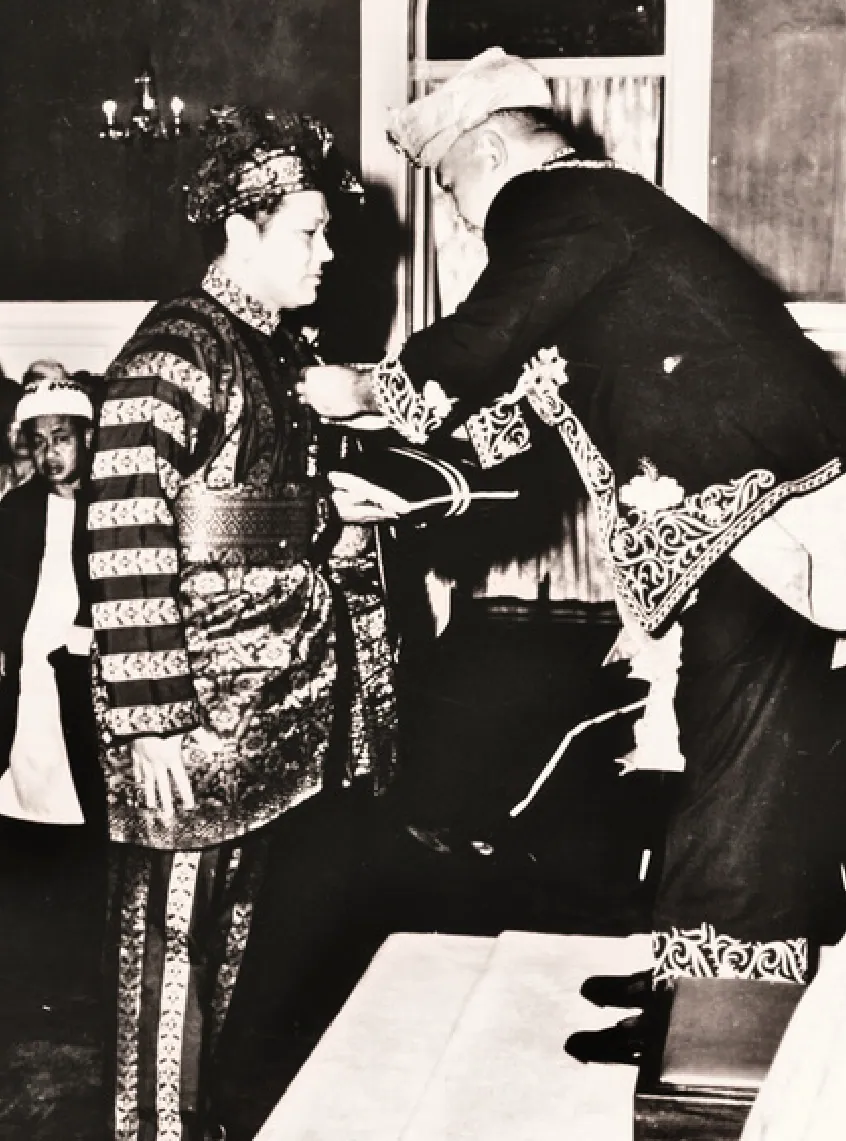
P. Ramlee was awarded the Ahli Mangku Negara (AMN), Member of the Order of the Defender of the Realm, by the Yang di-Pertuan Agong (Head of State of the Federation of Malaya) on 27 September 1962 at Istana Negara. It was the highest honour bestowed on anyone from the arts and culture industry at the time.

“Although I have attended various events, both on stage and in the midst of large crowds, I have never trembled as I did when I attended this ceremony. Especially when my name was called to meet His Majesty and receive the honour.”

1963

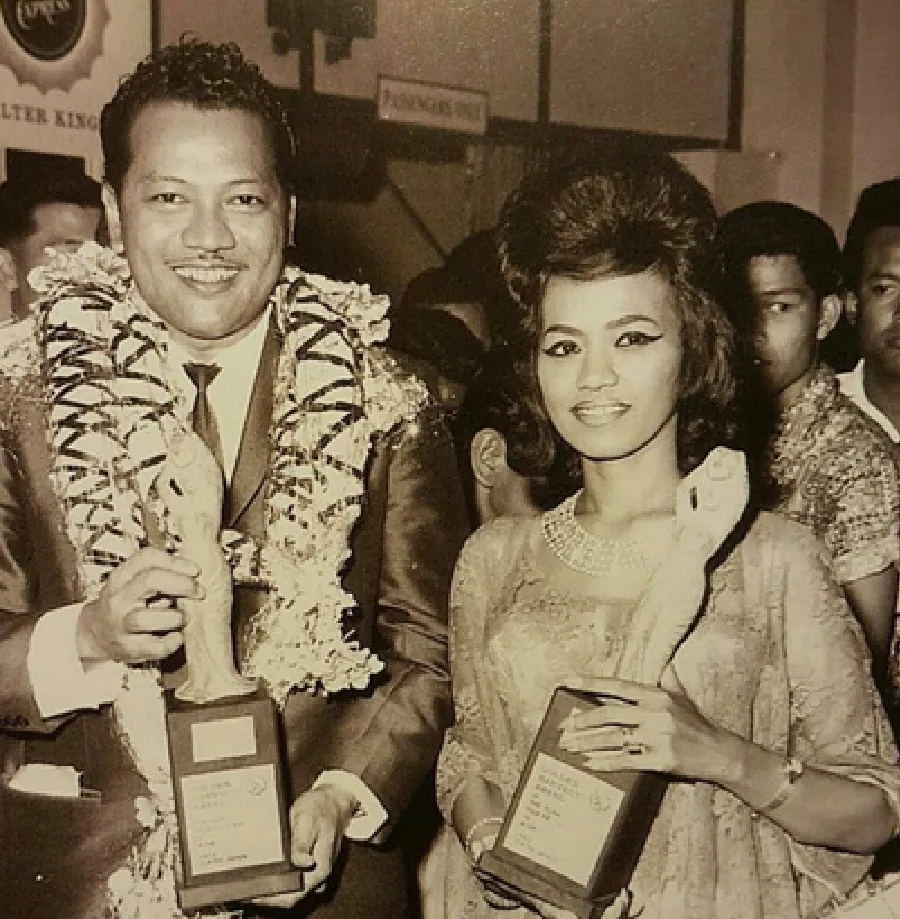
P. Ramlee was awarded “The Most Versatile Talent” for his direction, acting, screenwriting and musical work in Ibu Mertua-ku at the 10th Asian Film Festival in Tokyo.

The jury’s recognition of P. Ramlee’s diverse mastery of film-making was unprecedented and remains a unique distinction to this day. Abu Bakar Ali also won “Best Black-and-White Photography” for the film.

1964

P. Ramlee’s Madu Tiga won “Best Comedy” at the 11th Asian Film Festival in Taipei.

Kuala Lumpur 1964 – 1973

1964

After filming Tiga Abdul, P. Ramlee and his family moved to Kuala Lumpur in 1964 to work for Merdeka Film Productions (Merdeka Studio). He lived at 22 Jalan Dedap, Taman Furlong (now Taman P. Ramlee), Setapak, Kuala Lumpur. This house is now the P. Ramlee Memorial Museum, run by the National Archives of Malaysia. It was opened on what would have been his 57th birthday, 22 March 1986, by Malaysia’s current Prime Minister Dato’ Sri Anwar Ibrahim, who was then the Minister of Arts, Youth and Sports.

1965

Ibu Mertua-ku received a “Special Mention” at the International Film Festival in Paris.

P. Ramlee continued to direct, act, compose music and sing. He also devoted himself to TV dramas and stage performances. Among his well-received films were Do Re Mi, Masam-Masam Manis, Anak Bapak, Ahmad Albab, Keluarga 69 and Kanchan Tirana. Gerimis and Sesudah Suboh were notable in depicting the first interracial romantic relationships. Gelora and Dr. Rushdi were controversial for depicting sexually charged scenes and have been banned from screening since the 1980s. Minta Nombor Ekor is also banned for depicting horse racing and gambling.

P. Ramlee acted in the TV drama Intan (1971). He then starred in the TV drama Rantau Selamat (1972), of which only three episodes were broadcast, and composed its songs, which were among the last he composed. Both TV dramas were the work of National Laureate Abdullah Hussain. P. Ramlee also directed a stage drama called Sam Pek Eng Tai.

1973

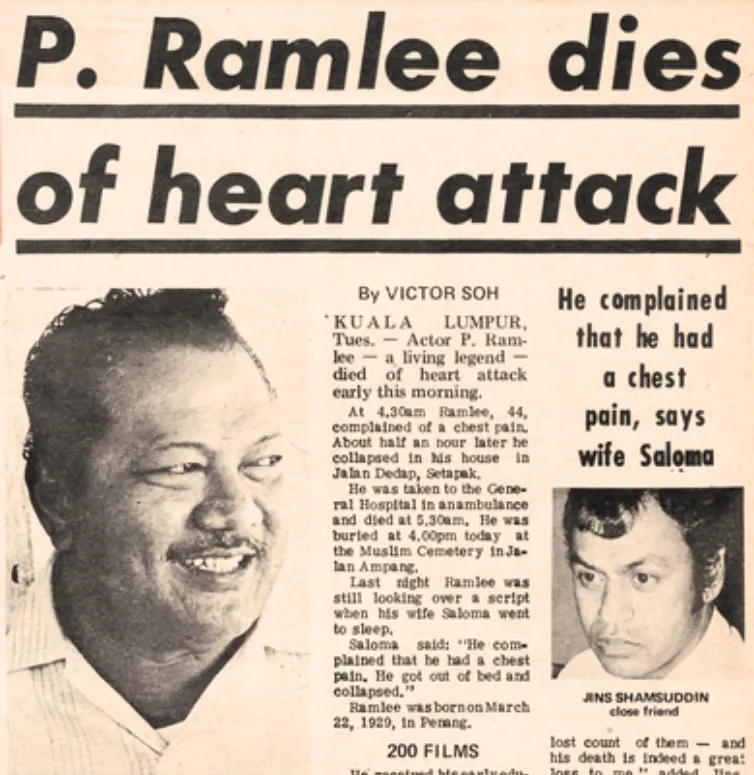
The news of P. Ramlee’s sudden passing due to a heart attack at the age of 44, on 29 May 1973, came as a shock to the nation. He was laid to rest at Tanah Perkuburan Islam, Jalan Ampang, Kuala Lumpur, near the present-day Petronas Twin Towers (KLCC).

His last film was Laksamana Do Re Mi (1973) and his last song was “Air Mata di Kuala Lumpur” (Tears in Kuala Lumpur). The song is seen as his tragically apt final goodbye, depicting his despair, sadness and broken dreams in Kuala Lumpur.

Posthumous Honours

1990

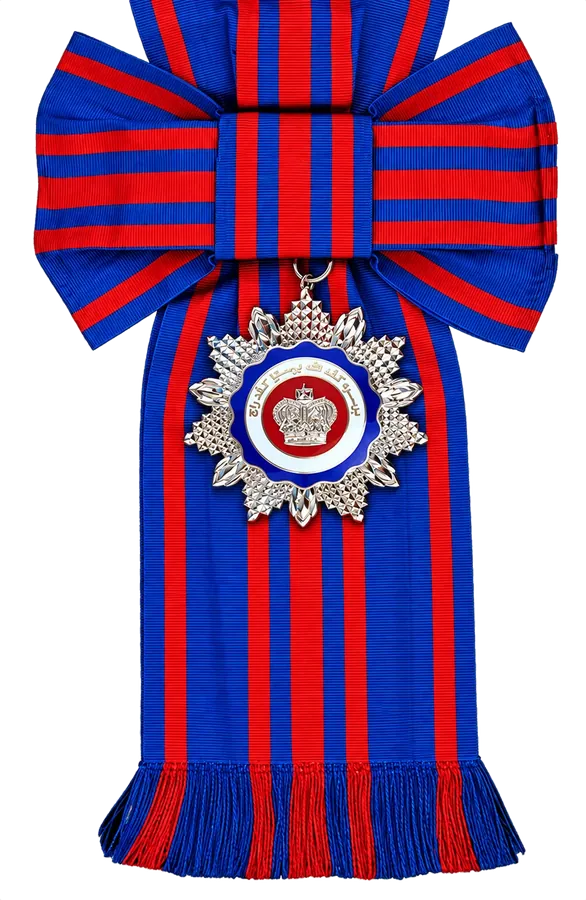
On 6 June 1990, the Seri Paduka Baginda Yang di-Pertuan Agong IX, Sultan Azlan Shah, posthumously conferred on P. Ramlee the Panglima Setia Mahkota (PSM), which carries the title Tan Sri. It was the highest honour for an artist at the time.

2005

P. Ramlee was awarded an honorary Doctorate in Performing Arts (posthumous) by Universiti Malaya.

2009

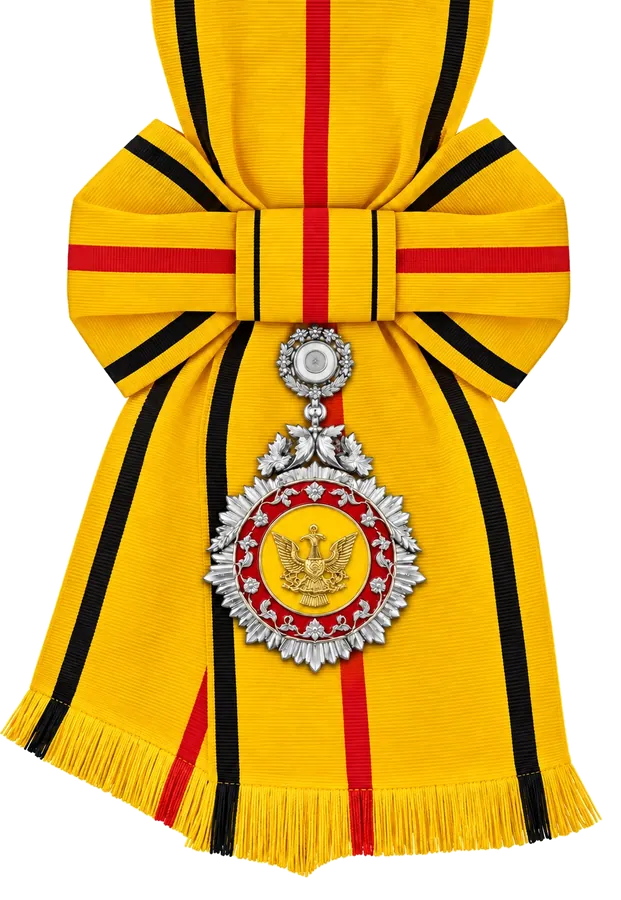
The government of Sarawak awarded P. Ramlee the Darjah Yang Amat Mulia Bintang Kenyalang Sarawak (DA), Knight Commander of the Most Exalted Order of the Star of Hornbill Sarawak, which carries the title of Datuk Amar.