
06 · Tributes
Glowing Tributes
A tribute by Adibah Amin, writing as ‘Sri Delima’, as quoted by National Laureate Abdullah Hussain in his biography of P. Ramlee, Kisah Hidup Seniman Agung (P. Ramlee: The Life of the Great Artist):
It is the magnetism that he possessed that made him special. He had it when he was a scrawny 19-year-old performing in his first film, Chinta (Love), and playing his first compositions on borrowed guitars. And he still had it at the age of 44 when he acted in his last film, Laksamana Do Re Mi (Admiral Do Re Mi), and composed his final song, Air Mata di Kuala Lumpur (Tears in Kuala Lumpur), as the undisputed king of Malay films and music. The Malay entertainment industry has seen equally accomplished actors, directors, scriptwriters, composers, and singers with originality, but none with Ramlee’s abundant talent. He was a master of the impromptu. As an actor, he adlibbed beautifully all the time, giving punchy crispness to much limp dialogue.
As a director, he scorned scripts, including his own, doing everything with a sort of inspired madness that had, nevertheless, its own method. The songs he wrote and sang had a way of acquiring subtle and even dramatic changes according to occasion and mood. Watching him work was a revelation, and working with him must have been an exhilarating experience. He threw himself totally into his work and electrified others into doing the same. Yet he always looked relaxed. Nothing ruffled him – and when nerves grew taut and tempers frayed, his jokes worked instant magic.
His scope was wide. His films included comedy, tragedy, history, satire, romance, and everything in between. His songs ran the gamut of human emotions from buoyant joy to brooding despair. His appeal was universal, and his fans ranged from tiny tots to toothless grandmas, from amahs to academics. His fiercest critics allowed that P. Ramlee had “something.” The man was as lovable as his image, as scores of people who knew him well will testify. His grin was as warm whether you were a big fish or an ikan bilis; his backslap resounding, his stories as hilarious.
He was generous to a fault, always ready to “belanja” (treat) anyone. Concerned friends despaired of ever saving him from weavers of hard-luck tales, however implausible. He loved children, and they adored him and trailed after him. In a way, he was a child himself in his spontaneity and wholeheartedness. Life could never be dull with Ramlee around. “Ramlee was not someone you talked to for an hour or two,” says one artist. “Sessions with him would last all night and still you would not have enough of him. He was the liveliest companion anyone could have.”
This is high praise, but it was genuine and not just the automatic eulogy one turns out when someone dies. Besides, I knew him too, and I do not think I got him wrong. Ramlee had a gift for happiness. He had his share of crises and failures, but never did he lose the spring in his step and the humorous sparkle in his eye. He laughed at many things, including himself. He was never in danger of suffering from delusions of grandeur. He knew his limitations and confessed them cheerfully. “Like all actors, I once fancied myself as a tragic hero,” he told me once. “I know better now. I haven’t got the face for it, you know.”
In 1969, after his birthday, P. Ramlee said, “Now that I am fat and forty, I must retire gracefully from playing Romeo. Anyway, it’s more fun to play old wolves, don’t you think?” He was able to say these things because there was little he couldn’t do. In a moment of exuberance, he stated, “Am I content with my life? Sure! Name it, and I have done it. Well or not is another question altogether – but I certainly had a good bash at most things.”
However, in a more reflective mood, he admitted that he had never gotten over the public’s lack of response to his most serious film, Antara Dua Darjat (Between Two Social Classes). He said that he would make another such film when he was ready and when the public was ready.
The film for which he composed the theme song “Air Mata di Kuala Lumpur” had a serious social theme. Another director would make it now, and we will never know what it would have been like in Ramlee’s hands. Ramlee passed away at 44, with many years of mature creativity ahead of him. It is difficult not to despair and quote the words of his song: “Where could we ever get someone to replace you...” but he would not have wanted to be mourned that way. The best monument we can build in his memory is a film, many films, that bring his most cherished ideas to life.
The Straits Times in an article titled “Superstar’s Passing” wrote:
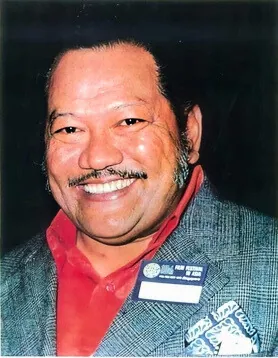
A prolific composer, P. Ramlee wrote over a thousand [sic] songs. A hard-working actor, he starred in close to 200 [sic] films and directed 50 [sic] of them. In addition, he was a singer, script writer, music arranger, winner of the Best Actor award at the Asian Film Festival (1957) and judged the Most Versatile Talent at the Tokyo Film Festival (1963). But, the mere listing of his accomplishments cannot adequately convey what he was in the Malay entertainment world.
P. Ramlee was “a pimply little extra” in his first film, made in 1948. He rose quickly to fame, taking comedy away from farce and the Malay film towards a vital character of its own, stripped of an Indian straight-jacket. The superstar ranged from Pendekar Bujang Lapok, possibly his best comedy, to Antara Dua Darjat, surely his best critique of class in society.
Ramlee’s contribution to Malay music too was substantial; and today the songs he composed 15 years ago, Azizah, Bunga Melor, Joget Pahang, are as popular as ever, and as widely performed by musicians of a younger generation. No other man has done more; yet he was never an egotist. Six months ago, P. Ramlee was asked if he was satisfied with his career. “Of course,” he replied. “I have done nearly all the things I wanted to do. What more can a man want?” What more indeed.