
03 · The Art
P. Ramlee, the Actor
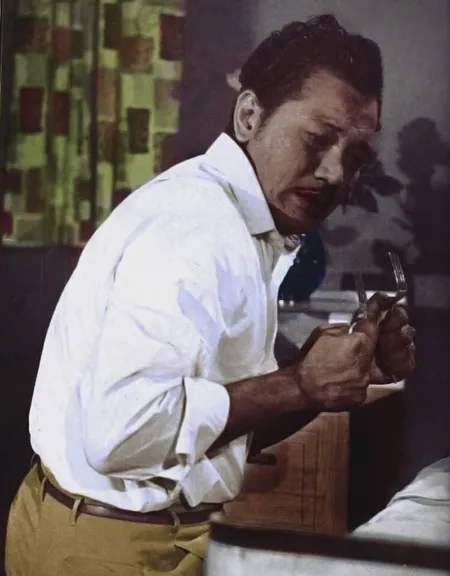
In his youth, P. Ramlee enjoyed watching films of Hollywood stars such as Tom Mix and Buck Jones and dreamed of film fame. After he arrived in Singapore in 1948, a screen test won him a small part in Chinta (1948). During an initial contract lasting two years, he appeared in eight films, quickly showing remarkable versatility. He played a villain in Chinta, a musician in Noor Asmara (1949), a comedian in Nasib (1949) and Nilam (1949), and a villain once again in Rachun Dunia (1950). Director L. Krishnan chose him as the leading man for Bakti (1950) and Takdir Ilahi (1950). Ever modest and willing to work as a team player, P. Ramlee was a supporting actor in Aloha (1950).
P. Ramlee once confessed that “even though the income earned from acting during those two years was not very satisfactory, it had its joys as I was given the chance to make records of my songs.” When his two-year contract ended, he took up a new contract with Malay Film Productions (MFP). The Shaw Brothers, who ran MFP, employed actors on a detailed contractual basis. The terms of their contracts were very strict and bound an actor to be under the total control of the company, both in his or her professional and private life. There was even a clause that laid down that he should wear his own clothes wherever street clothes were to be worn in the film.
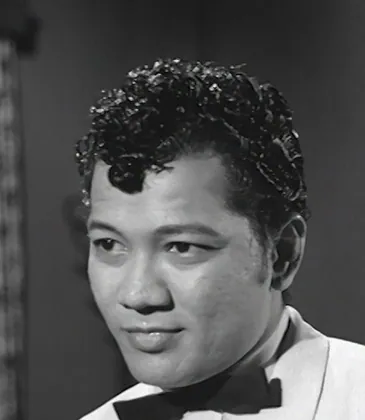
After P. Ramlee had gained the trust of the producer and his fame had grown, his initial salary of two hundred and fifty dollars a month was increased to six hundred dollars. He was also entitled to a bonus depending on his popularity. At his peak, he was receiving a bonus of thirty thousand dollars on a film. Success came to him very quickly. Although it was B.S. Rajhans who introduced him to the cinema, L. Krishnan was the one who made him a film star. His first role was very small, but he willingly submitted to playing a minor part and to being ordered around because he was anxious to learn the ropes and to profit from guidance from experienced people. The film Takdir Ilahi, directed by L. Krishnan, confirmed P. Ramlee’s reputation and set his foot on the ladder to fame.

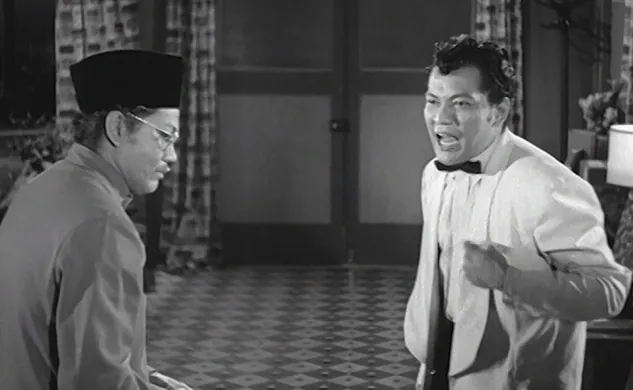
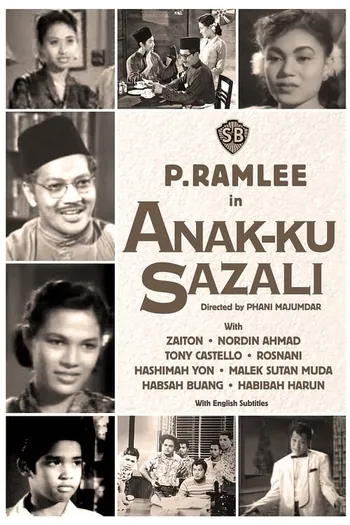
The Indian directors responsible for P. Ramlee’s early roles were men of great experience and creativity. They included L. Krishnan, Phani Majumdar, B.N. Rao, S. Ramanathan, K.M. Basker and B.S. Rajhans. B.N. Rao directed Hujan Panas in 1953, which was voted “Best Film of the Year” by the readers of Utusan Filem dan Sport, with P. Ramlee earning “Best Actor”. In 1956, Phani Majumdar directed Anak-ku Sazali, which earned P. Ramlee “Best Actor” at the 4th Asian Film Festival in Tokyo (1957) for his outstanding performance as both the father and the son.
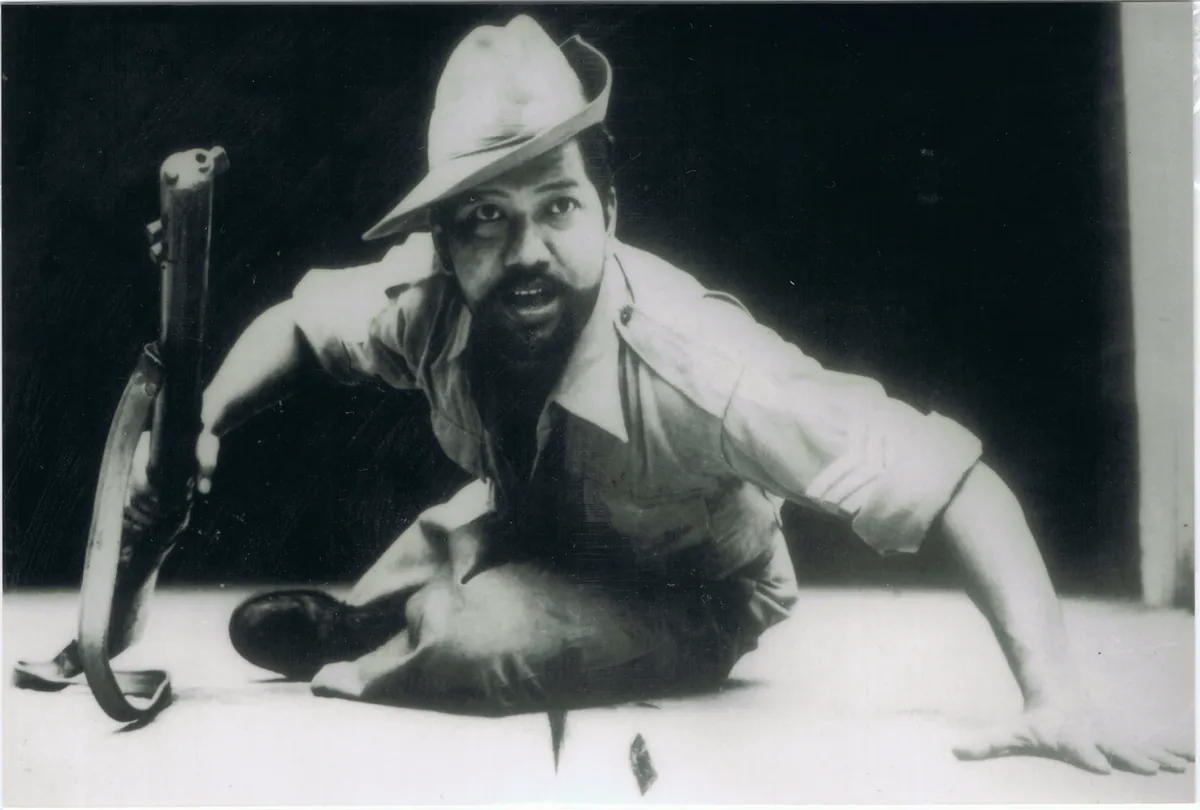
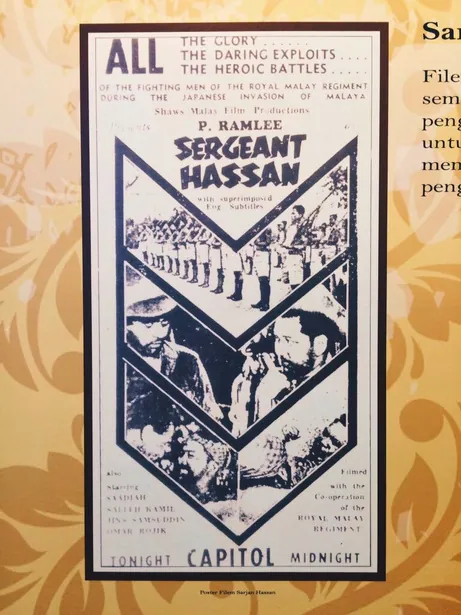
Another nationality was represented by Lamberto V. Avellana, the Filipino director responsible for Sergeant Hassan. He returned to his homeland before the film was completed and ready for screening, and it was left to P. Ramlee to edit the material and re-shoot various small sections. P. Ramlee also added one of his most enduring songs, “Tunggu Sekejap”, in three arrangements, including a marching band style.
The talented actresses with whom P. Ramlee was paired included big names such as Kasma Booty, Siput Sarawak, Rokiah, Neng Yatimah, Rosnani, Saadiah, Aini Hayati, Normadiah, Zaiton and Latifah Omar.
Their combination of acting abilities, beauty and renown helped launch him on the path to success. He, in turn, introduced and encouraged actors like Jins Shamsuddin, and actresses such as Nor Azizah, Sarimah, Rose Yatimah and Sharifah Hanim. The supporting actors in the early days of P. Ramlee’s Malay films were recruited from the travelling theatre (bangsawan), and preserved its technique, including the manner of speech. They included Aman Belon, Ahmad C.B., Siti Tanjong Perak, A.R. Tompel, S. Kadarisman, Jaafar Wiryo, Daeng Idris, Mustarjo, Malek Sutan Muda, D. Harris, Sharif Medan, Nordin Ahmad and M. Zain.