
03 · The Art
The Triumph of P. Ramlee
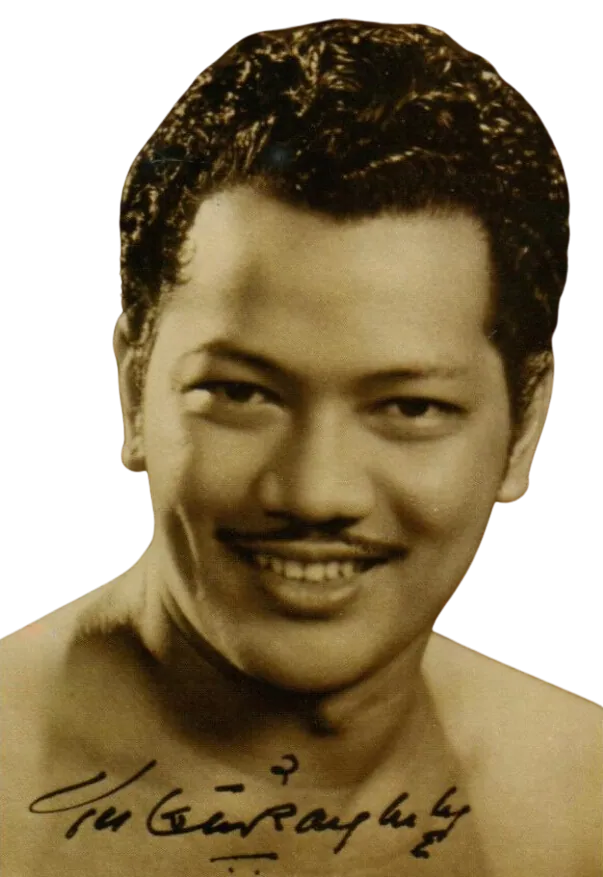
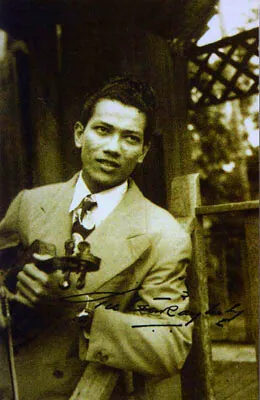
While working at the Jalan Ampas studio in Singapore, P. Ramlee enjoyed congenial surroundings and support from skilled technicians in all areas of film-making. However, at the Merdeka Film Productions studio in Kuala Lumpur, he had to work with inexperienced crews and equipment shortages. Despite these challenges, he chose themes that promoted unity, such as those in Sesudah Suboh and Gerimis, which portrayed social conditions within a multiracial society.
P. Ramlee also recruited former theatre actors to his casts, which proved successful and encouraged him to employ others who had learned their craft on the stage. As a result, he was rewarded with talented artists such as Mahmud June and A.R. Tompel, as well as famous names such as Sarimah, Latifah Omar, Kasma Booty, Siput Sarawak, Jins Shamsuddin and Yusof Latiff, who had all acted in Malay Film Productions films.
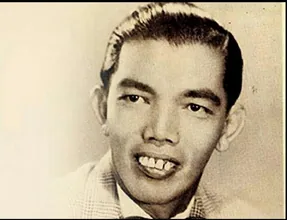
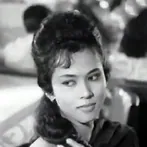
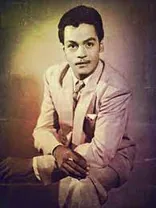


P. Ramlee is a true icon of Malaysian entertainment. Even now, decades after his death in 1973, the legacy of P. Ramlee lives on in the hearts of Malaysians inspired by his songs and his films. They continue to inspire and captivate Malaysians of all ages, with children who were born after his death still familiar with his charming humour. Few entertainment figures have left such an indelible mark on our country. His films are continually revived on television and in cinemas as the “P. Ramlee Film Festival” and as “P. Ramlee Theatre” and other titles. They have lost none of their attractiveness. Digital processing has, moreover, enormously improved their quality.
One is astonished, not so much by the pleasant nostalgic memories of those who grew up with P. Ramlee movies, as by the profound effect they have on Malaysia’s young people. Another proof of their classic status is the way in which many phrases from P. Ramlee’s films have become part of everyday language in Malaysia. These include “angan” (dreaming of one’s love), “kapur” (borrowing something with no intention of returning it), “cubaan” (life challenges which ought to be deemed a test of our faith), “ulat bulu” (cheeky, flirty men) and “mambang” (ghost or lover). The catchphrases, dialogues and music of the films, whether comedies, dramas, musicals or historical epics, are still remembered and imitated, even by children barely old enough to understand them.
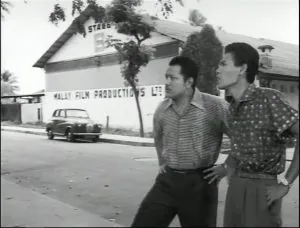
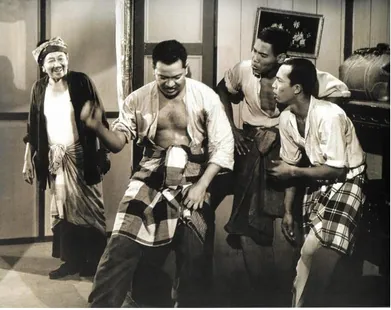
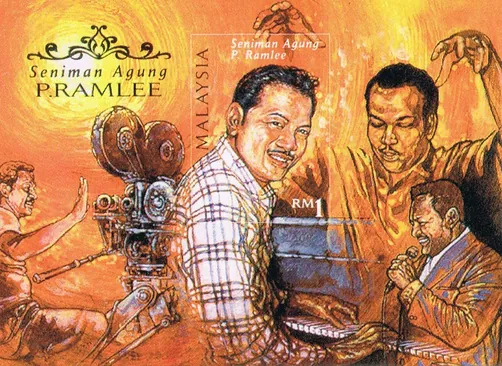
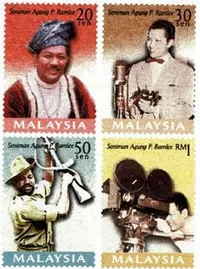
In the 1950s, P. Ramlee’s influence was so great that young people copied his hairstyle, moustache and shirts. Fans rushed for his autograph. One Malaysian fan was lucky enough to get an autograph from P. Ramlee himself in 1950 at the Tong Yoon Hotel in Tapah, where he inscribed the words “Love yourself — the world will love you.” In 1999, this same fan, the late Tun Ahmad Sarji (former Chief Secretary to the Government of Malaysia and Chairman of PNB), was honoured by Pos Malaysia Berhad to launch the first day cover and commemorative stamps in honour of P. Ramlee.
We can echo the words of his famous song, “Di Mana Kan Ku Cari Ganti” (“Where will I find another?”). For P. Ramlee is irreplaceable, a legendary figure whose cultural bequest lives on forever in the hearts of all who love Malaysia.