
08 · Research
Reframing the National Culture Narrative of P. Ramlee
Adil Johan
Johan, A. (2021). Reframing the national culture narrative of P. Ramlee. In Z. Ibrahim, G. Richards, & V. T. King (Eds.), Discourses, agency and identity in Malaysia: Critical perspectives (pp. 367–385). Springer. https://doi.org/10.1007/978-981-33-4568-3_16
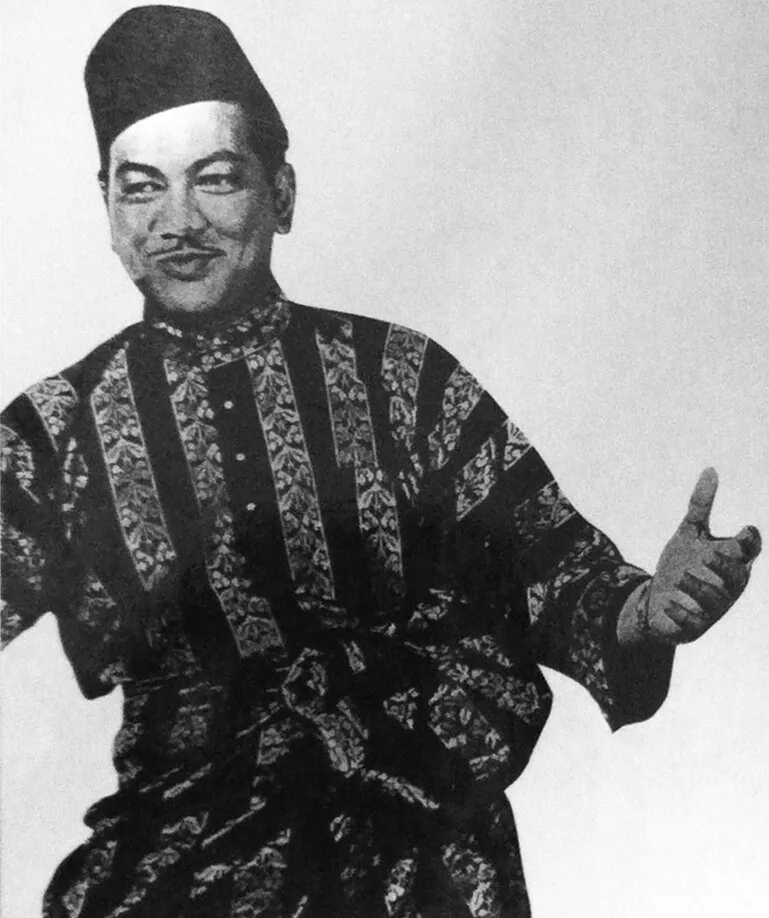
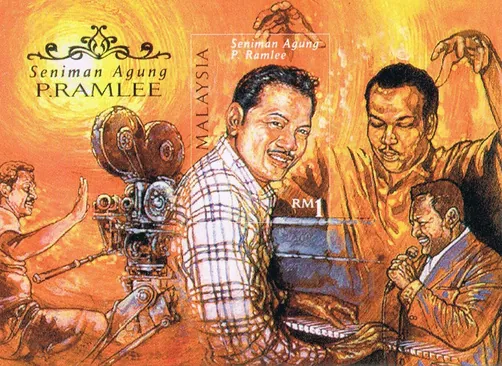
This work discusses the dominant ethnonationalist narrative of P. Ramlee, a musician, composer, actor, and film director who became a Malaysian national icon after his death. While his film music is considered a symbol of artistic excellence, it is rarely analyzed in conjunction with the postcolonial nation-making context in which it was created. P. Ramlee’s music was modern, hybrid, and cosmopolitan, drawing on various global and local sources. However, he openly criticized British-American rock ’n’ roll music and culture, leading him to become a voice for the preservation of local traditional music. This conservative turn has been resilient, with P. Ramlee’s life being reframed as a tragedy to propagate his rhetoric of cultural preservation, which undermines the uniquely cosmopolitan contribution of his films and music.
P. Ramlee, a multitalented artist, was made a Malaysian national icon after his death in 1973. His films and music were broadcast and memorialized in tribute, and he became a symbol of artistic excellence in national culture. However, his music was rarely analyzed critically in line with the history of postcolonial nation-making in Malaysia. This discussion reveals that his music was modern, hybrid, and cosmopolitan, incorporating pop yeh yeh, a style of music influenced by British-American rock ’n’ roll bands.
The nationalist narrative of P. Ramlee’s life is best exemplified in Shuhaimi Baba’s 2010 documentary film about him. This narrative perpetuates a conservative and homogeneous understanding of national culture that actually undermines the uniquely cosmopolitan contribution of his films and music. While he appeared to be a reactionary in relation to cultural change, his films and music exemplify the fluid, heterogeneous and essentially cosmopolitan history of nation-making in the Malay Peninsula, which is often forgotten in official national narratives.
Findings and discussion
In Malaysia, P. Ramlee’s cultural and artistic legacy is highly esteemed, yet the nation-state promotes his iconicity to establish a rigid concept of Malay(sian) artistry and national culture. This narrative is reinforced by state-sponsored institutions like the P. Ramlee Memorial Museum and documentary films such as P. Ramlee: A Biography, which highlight his irreplaceability. This emotional narrative of tragic irreplaceability is fuelled by the culturally intimate trope of kasihan, linked to his life story and symbolizing underappreciated local traditions and state-sanctioned national cultures that need protection from decadent outside cultures.
This work provides a historical overview of the discourses surrounding P. Ramlee’s iconicity. As a prominent creative individual who produced artistic works in film and music during the nation-making transition period in the Malay Peninsula, he was immortalized as a dominant but highly contested national icon. The state-endorsed narrative portrays him as a bastion of Malay ethnonational purity and greatness in the arts, setting standards for “authentic” Malaysian film and music. However, a cultural history of P. Ramlee that highlights his cosmopolitan tendencies and artistic practices reveals a more complex (counter-)narrative. His national narrative is paradoxical, characterized by both embracing and rejecting new cultures, an international outlook seeking to cement a national identity, and a cosmopolitan aesthetic that aims to preserve traditional practices.
Conclusion
These contradictions are integral to the national narrative of Malaysia, a once cosmopolitan and fluid region that became independent through an ethnonationalist, capitalist ideology sourced in post-war imperialism. Despite efforts to confine P. Ramlee’s narrative to a homogeneous vision of national culture, the cosmopolitan intimacies of his music and film will continue to emerge, enabling new interpretations and (re)definitions of autonomous and diverse Malaysian identities to be expressed for generations to come.