
08 · Research
P. Ramlee, the Star: Malay Stardom and Society in the 1950s–60s
Jonathan Driskell, Monash University Malaysia
Driskell, J. (2022). P. Ramlee, the star: Malay stardom and society in the 1950s–60s. In J. Driskell (Ed.), Film stardom in South East Asia (pp. 36–50). Edinburgh University Press. https://doi.org/10.1515/9781474442213-005
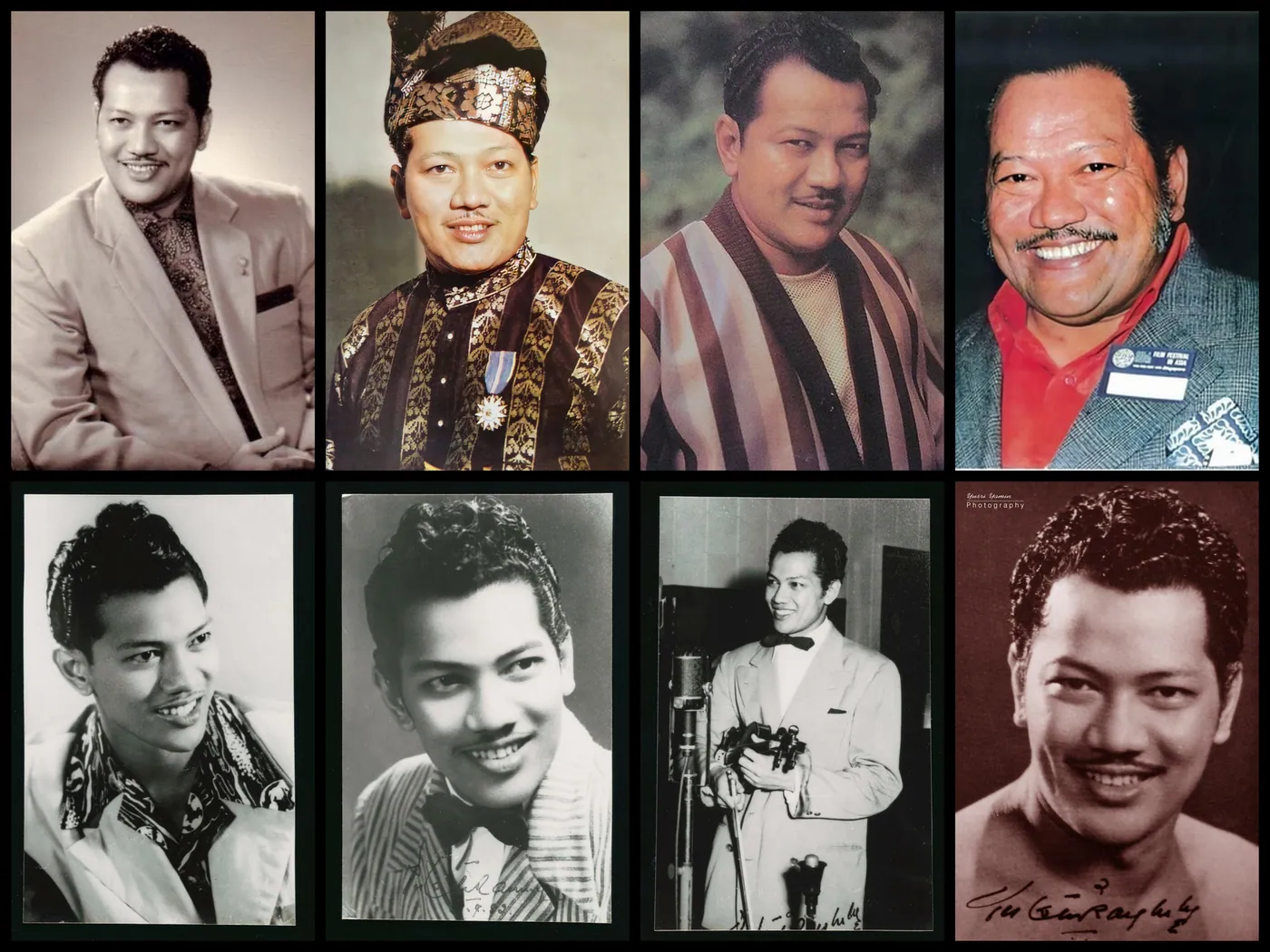
This chapter examines P. Ramlee’s stardom, mainly from the mid-1950s to around 1964, during which he was at the height of his fame, primarily in terms of his ‘star persona’ – how his films establish and use his image, and the contributions of his performance; his presence in extra-filmic materials, namely newspaper and fan magazine articles, as these also play a role in shaping his identity. The chapter draws on ideas from Richard Dyer, especially his discussions of ordinariness and extraordinariness (1998) and of stardom and the individual (2004). The aim of the chapter is not so much to understand the ‘real’ P. Ramlee or his perspective on his historical circumstances, but instead to examine the nature of his profoundly popular star persona and consider what this can tell us about the era in which he attained his fame.
Performance, talent & celebrity
P. Ramlee entered the cinema from a musical background, rather than via the bangsawan theatre. His performances tended towards a more spontaneous and naturalistic style, which contained nuances of expression as well as moments of sudden excitement and energy.
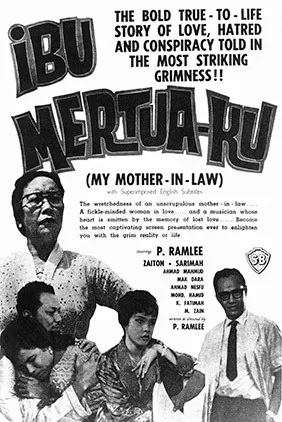
His talents were narrativised in ‘stardom films’ like Ibu (1953), Anakku Sazali (1956) and Ibu Mertuaku (1962), in which he played musicians, a premise that provided narrative motivation for diegetic performances. He even won an award at the 10th Asian Film Festival (Tokyo, 1963), where he received a special award for ‘Most Versatile Talent’ for his work on Ibu Mertuaku.
His persona also stood out in his off-screen life as a celebrity. Along with several other Malay Film Productions (MFP) stars, he created a new fan magazine called Bintang (the Malay word for star) in 1953, which he took control of as editor (Teh 2017, cited in Driskell 2022).
Idealised ordinariness
Ramlee was not just in a position of greater physical proximity to his fans, as compared with international stars; he also offered greater possibilities for identification on a cultural level too, especially through his embodiment of traditional Malay identity (Malay cultural identity on and off-screen). Ramlee’s nuanced, low-key acting reveals working-class characters who are honest, unaffected, and genuine.
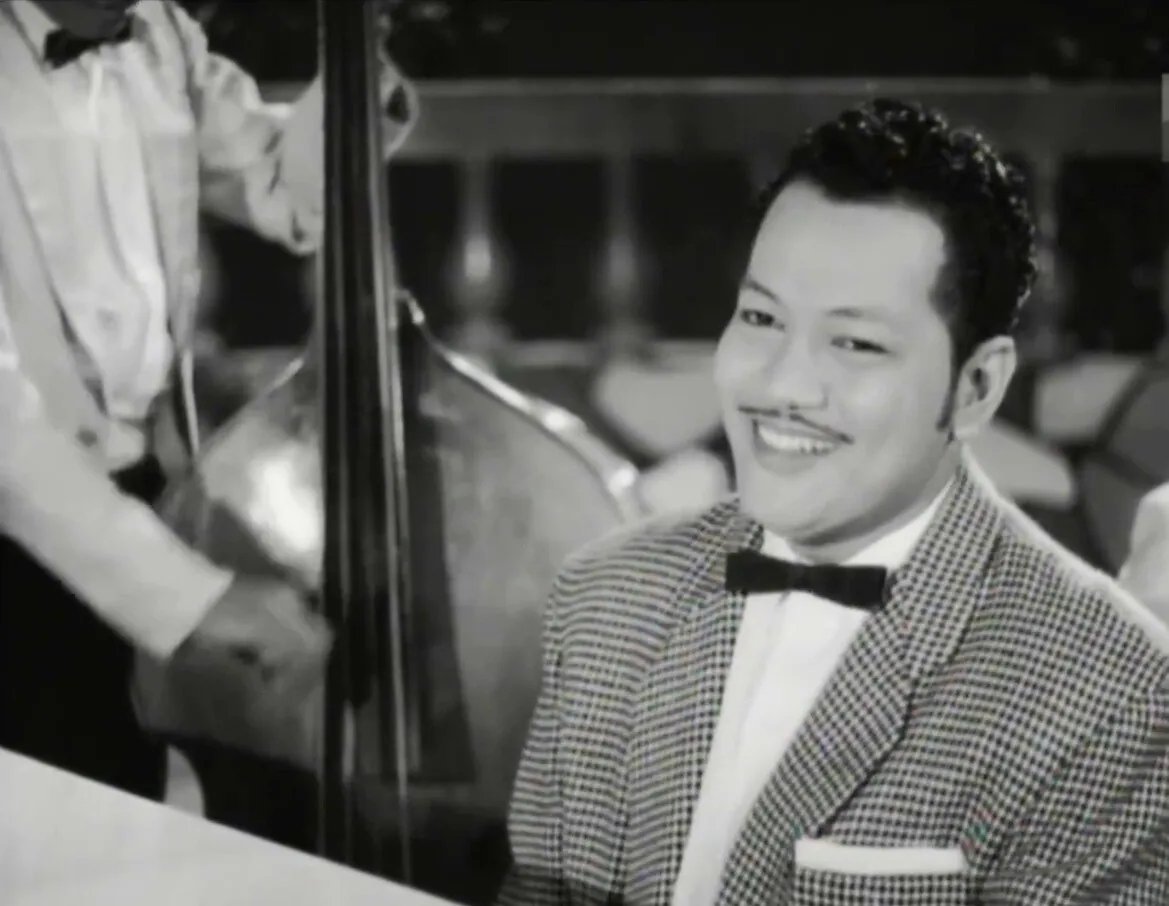
His performance style also brought charisma to his films, especially owing to his energy, confidence and spontaneity, not to mention his broad, charming smile, which he would flash in close-ups and while performing musical numbers.
A modern individual
Ramlee’s youthfulness (he was in his twenties to early thirties during this time) helped him represent a younger generation, embodying the period’s new ideas and styles, in contrast to older characters portrayed by the former bangsawan stars he acted alongside. In addition, Ramlee was associated with the modern city and its spaces.
Conclusion
Ramlee’s persona stems from his role as a star, and ultimately the tensions within his persona between the traditional and the modern areas of his identity demonstrate a common feature of film stardom: its capacity to reconcile opposing ideological viewpoints (Dyer 1998, cited in Driskell 2022).