03 · The Art
Culture and Religion
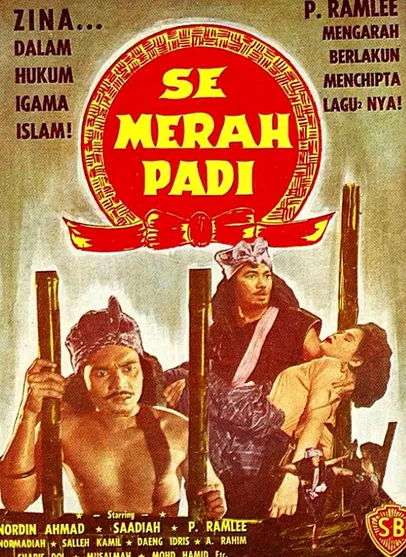

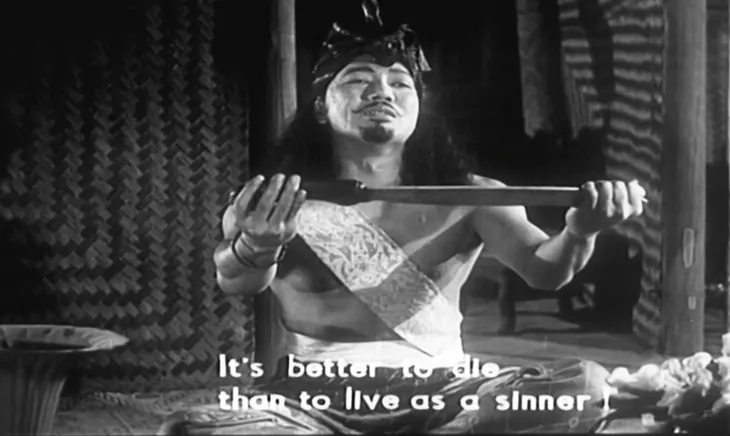
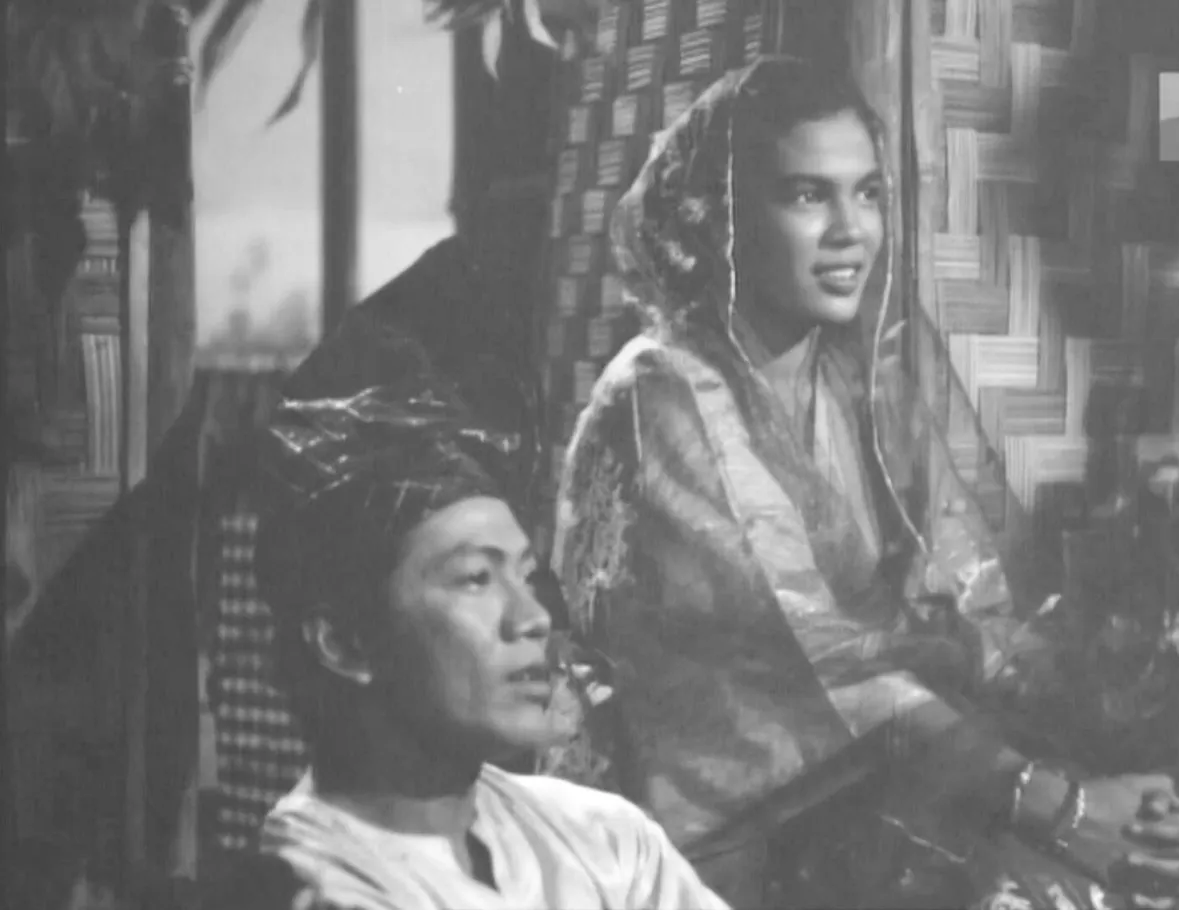
P. Ramlee’s love for Malay culture and religion is evident in his film Semerah Padi, which also showcases the influence of Japanese director Akira Kurosawa’s work. In this film, P. Ramlee uses camera angles and focus lenses to create dramatic effects, a technique that is noticeable and unique. The film’s central theme is based on Malay culture and highlights the villagers working together in harmony and sharing a sense of camaraderie while cultivating the paddy fields.
The movie also showcases the importance of Malay culture in being courteous and refined. The audience can observe this when the heroine, Dara, walks past her parents with her head bowed low. Another traditional aspect of the Malay culture in Semerah Padi is the presentation of betel leaves as engagement gifts to the couple.
P. Ramlee emphasises the Islamic influence in Semerah Padi by showing how Malay culture has roots in the teachings of Islam. The director illustrates Islamic justice through punishment for those who commit adultery (zina). The village headman in the film emphasises that they are Muslims and need to adhere to the religion’s laws. Overall, the film Semerah Padi is a testament to P. Ramlee’s ability to depict the beauty of Malay culture and its roots in Islamic beliefs.

In Sumpah Orang Minyak, we once again witness the power of God. The ugly Si Bongkok questions God about the sins that led to his deformity. Although Si Bongkok cannot experience the pleasures of this world, Allah, the Most Gracious, has the power to transport him to the spiritual world where he can finally experience the joys of life.
P. Ramlee, in his magazine Gelanggang Filem, commented that making a religious film is not as easy as making purely fictional films that can be altered by the director, as the former has strong connections with human spirituality, especially for the adherents of that particular religion.
Making films inspired by Islamic stories is particularly challenging as Islamic laws carry severe penalties where issues of belief are concerned. Hence, one must be cautious to avoid deification and ridicule of the tenets upon which the faith of the Islamic Ummah is founded. Therefore, the production of a religious film should be treated with the utmost care and restraint.